In this guide
- Before You Search: Know Your Truck
- Step 1: Search for Quality Loads
- Step 2: Evaluate the Load
- Step 3: Negotiate the Rate
- Step 4: Verify the Broker and Protect the Carrier
- Step 5: Confirm and Book the Load
- Step 6: Dispatch the Driver and Stay in Touch
- Load Booking Checklist
- Pro Tips from Experienced Dispatchers
- Frequently Asked Questions
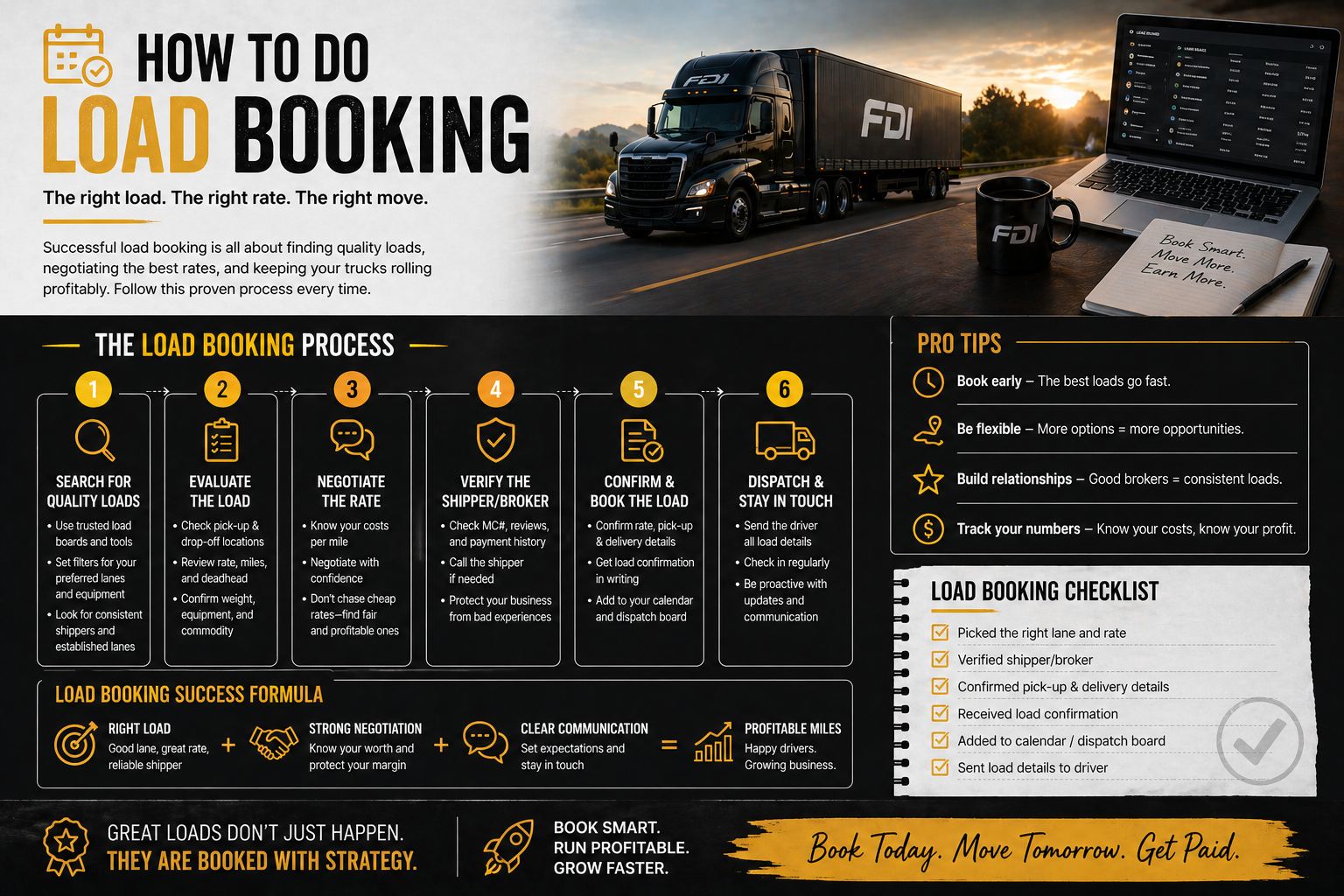
Load booking is the process a truck dispatcher follows to find freight for a truck, agree a price with the broker and get the driver on the way to pickup. Done well, it keeps trucks loaded on profitable lanes. Done carelessly, it leads to unpaid invoices, missed appointments and fraud. Professional dispatchers follow the same six steps every time: search, evaluate, negotiate, verify, confirm and dispatch.
Key takeaways
- Start every search from the truck's real situation: location, equipment, available hours and the driver's preferences.
- Judge a load by its all-in rate per mile, the reload market at the destination and the broker's reliability, not just the posted price.
- Always verify the broker and read the full rate confirmation before telling the driver the load is booked.
- Booking does not end at confirmation. Clear driver instructions and regular updates protect the relationship and the payment.
Before You Search: Know Your Truck
A load only makes sense if it fits the truck. Before opening a load board, confirm:
- Location and availability: where the truck is empty (or will be) and when.
- Equipment: trailer type and length, maximum weight, and extras such as straps, tarps, load locks or a reefer unit.
- Driver hours: how much driving time is left on the 11-hour and 14-hour clocks and on the weekly 60/70-hour limit. See hours of service rules.
- Carrier preferences: preferred regions, states or cities the carrier avoids, home time and minimum acceptable rate.
- Carrier setup: which brokers the carrier is already approved with, since those loads can be booked faster.
Step 1: Search for Quality Loads
Most dispatchers search one or more load boards and also contact brokers they have worked with before. Useful search settings include:
- Origin and radius: the truck's location with a sensible deadhead radius, for example 50 to 100 miles.
- Destination: a specific city or state, a region where the market is strong, or "anywhere" when you want to see all options.
- Equipment type and whether you want full truckloads, partial loads or both.
- Pickup date and the age of the posting, because older postings are often already covered.
- Weight and length limits that match the trailer.
Save frequent searches and set alerts so new loads on your preferred lanes reach you quickly. Good loads are often booked within minutes.
Step 2: Evaluate the Load
Before calling, decide whether the load is worth your time. Look at:
- Pickup and delivery locations and times. Can the driver make both appointments legally?
- Miles and deadhead. Calculate the rate per mile on loaded miles and on all miles including the empty drive to pickup. Use our rate per mile guide.
- Commodity and weight. Does it suit the equipment, and are there special requirements such as temperature control, securement or high-value cargo?
- The destination market. A high rate into an area with little outbound freight can mean a long, empty drive afterwards.
- The broker's credit and payment history, which many load boards show as a credit score and average days to pay.
Step 3: Negotiate the Rate
Call the broker (or use the contact method listed) and gather the full details before talking price. Typical questions include:
- Is the load still available, and what are the exact pickup and delivery addresses and times?
- What is the commodity, weight and piece or pallet count?
- Is it live loading/unloading or drop and hook? Are there extra stops?
- What are the detention terms, and is there a lumper fee at the receiver?
- What rate are you offering?
Then negotiate using what you know about the lane rate and the carrier's costs. Ask for a fair number, explain your truck's advantages (ready now, close to pickup, reliable), and be prepared to walk away if the rate is below the carrier's minimum. Our negotiation playbook covers scripts and common objections.
Step 4: Verify the Broker and Protect the Carrier
Freight fraud and double brokering are real risks. Before agreeing to any load:
- Look up the broker's MC or USDOT number in FMCSA's public records and confirm the broker authority is active.
- Check that the phone number and email domain match the broker's official contact details, not just what appears in the posting.
- Review the broker's credit score and days-to-pay information.
- Be suspicious of rates far above the market, pressure to book immediately, requests to change who gets paid, or instructions to deliver to a different address than the rate confirmation.
Watch out for double brokering
In a double brokering scam, a fraudster poses as a legitimate broker (or carrier) and re-posts a load they have no right to sell. The carrier hauls the freight and never gets paid. Verifying the broker through FMCSA records and calling the number listed there, not the number in the email, is your first line of defence.
Step 5: Confirm and Book the Load
If the carrier is not already set up with this broker, complete the broker's carrier packet first. Then the broker sends a rate confirmation, the contract for this specific load. Read every line before signing:
- Carrier name and MC number are correct.
- The agreed rate, and any accessorials such as detention, layover, extra stops or lumper reimbursement.
- Pickup and delivery addresses, dates, appointment times and reference or PO numbers.
- Commodity, weight, equipment and temperature requirements.
- Payment terms and any fines or special instructions (tracking requirements, check call frequency, late fees).
If anything differs from what you agreed on the call, ask the broker to correct it before signing. Learn what else to check in dispatch paperwork explained.
Step 6: Dispatch the Driver and Stay in Touch
Once the rate confirmation is signed, send the driver a clear dispatch message with:
- Pickup and delivery addresses, appointment times and reference numbers.
- Shipper and receiver contact details and any site instructions.
- Commodity, weight, temperature settings or securement requirements.
- What to check on the bill of lading and to send photos of documents.
Then keep the broker updated: when the driver arrives, is loaded, is on the way and has delivered. Record arrival and departure times in case detention applies. After delivery, collect the signed proof of delivery so the carrier can invoice or submit to factoring, and start planning the next load.
Load Booking Checklist
| Check | Why it matters |
|---|---|
| Right lane, right rate | Keeps the truck profitable and positioned for the next load |
| Broker verified in FMCSA records | Protects the carrier from fraud and non-payment |
| Pickup and delivery details confirmed | Prevents missed appointments and wasted miles |
| Driver hours checked | Keeps the trip legal and on schedule |
| Rate confirmation reviewed and signed | Locks in the agreed price and accessorials |
| Load added to your tracking sheet or TMS | Keeps every truck and invoice organized |
| Dispatch instructions sent to the driver | Gives the driver everything needed to execute |
Pro Tips from Experienced Dispatchers
- Book early. Start looking for the next load before the current delivery, especially for Friday and weekend reloads.
- Stay flexible. Sometimes a slightly lower rate that leads to a strong reload market beats the highest single load.
- Build broker relationships. Brokers call back dispatchers who communicate well and deliver on time, and the best loads are often never posted publicly.
- Track your numbers. Record the rate, miles and deadhead for every load so you learn which lanes truly pay.
Practice load booking on real load boardsOur Practical Training includes live load booking demonstrations and DAT and Truckstop training.
View Training PlansFrequently Asked Questions
How long does it take to book a load?
An experienced dispatcher can find, negotiate and confirm a straightforward load in well under an hour. New carrier setups with a broker, difficult markets or loads with special requirements take longer.
Do dispatchers book loads under their own name?
No. Loads are booked under the carrier's name and MC number. The rate confirmation is between the broker and the carrier, and the broker pays the carrier or its factoring company.
What is the difference between a posted rate and the final rate?
The posted rate is the broker's starting offer, and many loads are posted without a rate at all. The final rate is what you agree after negotiation and appears on the signed rate confirmation.
Can a dispatcher book loads without a load board?
Yes. Established dispatchers often get loads directly from brokers they have strong relationships with, including regular or dedicated lanes. Load boards remain the main starting point for new dispatchers.